Key takeaways
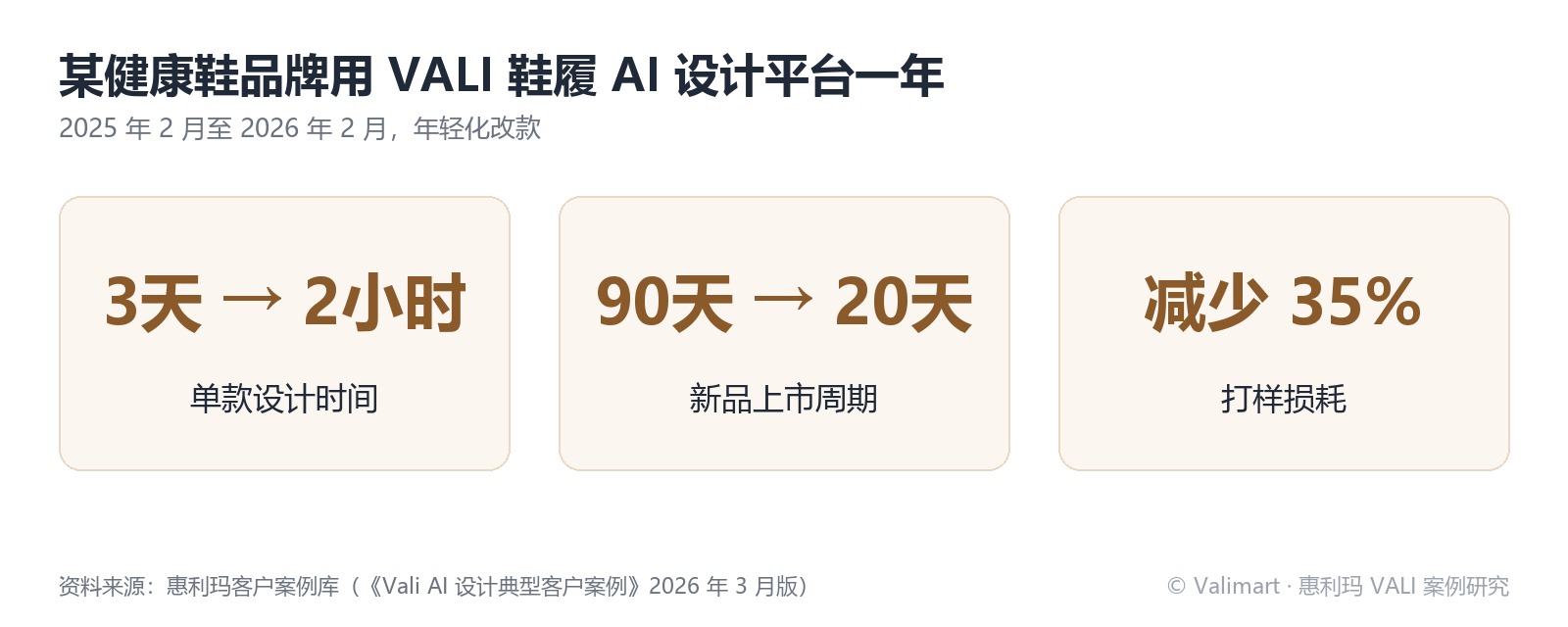
- Designing one style went from 3 days to 2 hours. A nationwide health-shoe chain used the VALI AI footwear design platform to refresh its range for younger buyers, cutting the time to design one style from about 3 days to about 2 hours.
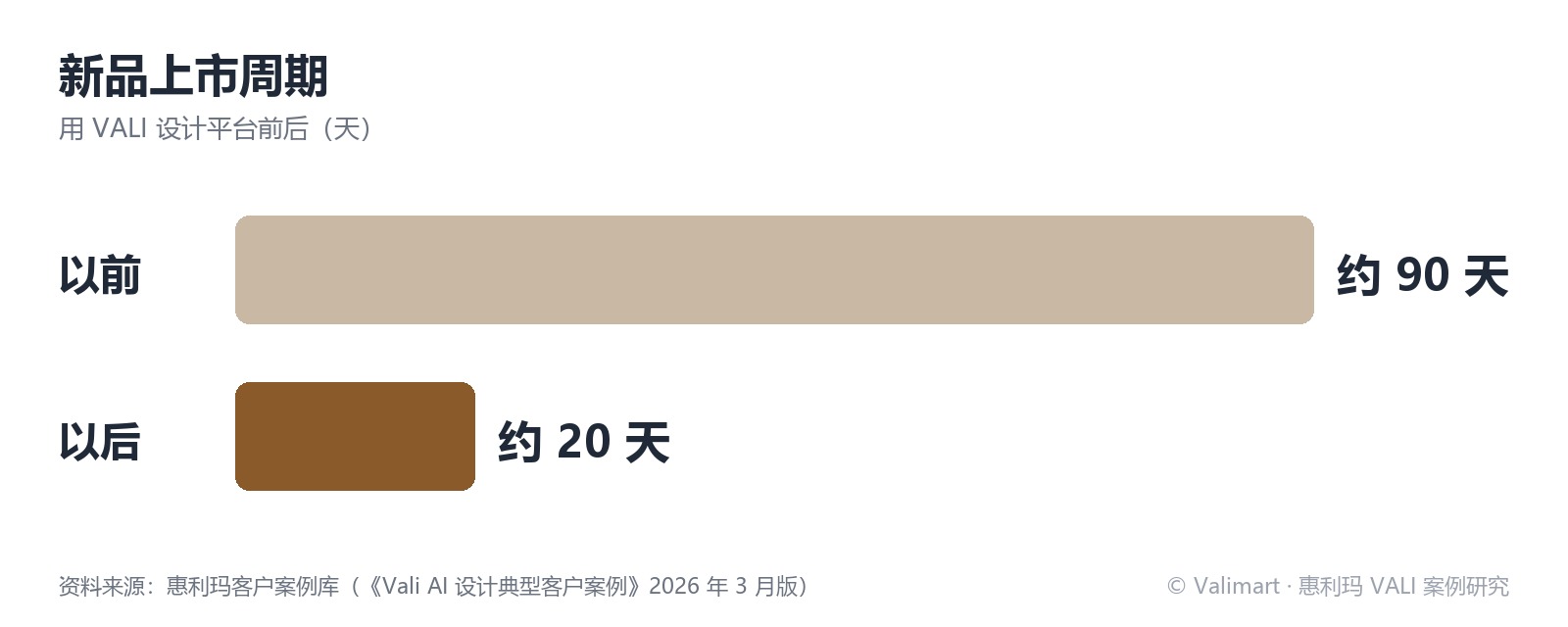
- The new-product launch cycle went from 90 days to 20 days. The cycle from start to launch fell from about 90 days to about 20 days.
- Sampling waste fell by 35%.
- Who can learn from it: traditional footwear brands that need a younger look, rely on a narrow colour palette and keep re-sampling every new style.
Author: Valimart VALI Case Studies | Published: November 2026 | Source: Valimart customer case library (compiled November 2026; original source: "Vali AI Design Typical Customer Cases", March 2026 edition) | In line with Valimart's external policy, the customer is not named.
1. What the health-shoe brand needed to fix
The customer is a health-shoe brand with a large chain of stores across China. The case library records three needs when it came to Valimart:
- A younger look. Comfort is its core strength; the brand wanted styles that appeal more to younger consumers.
- A narrow colour palette. It needed more, and fresher, colour options.
- Costly trial-and-error sampling. New styles only became clear once a physical sample existed; unsatisfying samples were remade, wasting samples and materials.
The brand used the VALI AI footwear design platform (version 3.0) from February 2025 to February 2026, one full year.
2. Which platform functions match those needs
The VALI AI footwear design platform covers 29 common footwear-design scenarios. The ones directly related to these three needs are:
| Need | Matching platform function |
|---|---|
| Unsure where to take a younger look | Trend and colour references that help set the direction first |
| Narrow palette, slow restyling | AI restyling and recolouring of existing styles, several options at once |
| Too much sampling | Photo-realistic renderings in about 10 seconds, so options can be compared and revised on screen |
3. The numbers after one year
| Metric | Before | After | Change |
|---|---|---|---|
| Time to design one style | About 3 days | About 2 hours | Sharply shorter |
| New-product launch cycle | About 90 days | About 20 days | About 70 days shorter |
| Sampling waste | — | — | Down 35% |
Source: Valimart customer case library ("Vali AI Design Typical Customer Cases", March 2026 edition).
The three numbers are linked. If design gets faster but every new style still needs many samples before anyone dares to approve it, the time saved is lost in sampling. When renderings are clear enough, some options can be dropped before sampling, which is how design time, launch cycle and sampling waste can fall together.
4. Which steps of a younger health-shoe range suit AI
Our suggested split of work for brands like this:
| Step | Suits AI | Still needs people |
|---|---|---|
| Setting direction | Collecting trend styles and colour references, offering several directions | Brand positioning, target buyers, price band |
| Restyling and colour | Quickly producing several exterior options from an existing style | Last shape, arch support, outsole and other comfort structures |
| Renderings | Photo-realistic renderings in about 10 seconds for review | Deciding which styles go to sampling |
| Sampling | — | Fitting, comfort and workmanship checks |
A health shoe sells on comfort, and comfort comes from structure and the last. That part should not be changed freely by AI. A safer approach is "keep the structure, change the exterior fast": AI produces more exterior options, faster; people protect comfort and workmanship.

5. How traditional footwear brands can apply this
- Start with one line. Pick the line that most needs a younger look and compare design time and sample counts before and after AI over one season.
- Write "structure stays" into the rules. Decide in advance which parts may change and which may not, so AI options stay true to the brand's comfort positioning.
- Move rendering reviews earlier. Let merchandising and management choose at the rendering stage and sample only the chosen options.
How to tell whether AI is working
The three numbers in this case all come from comparing "before" and "after". To check the effect yourself, record the baseline before you start; otherwise, six months later it is hard to say how much was saved:
| What to record | How | What it shows |
|---|---|---|
| Time to design one style | Hours from brief to approved design, per style | How much faster design is |
| Samples per style | Number of sample rounds for each style that launches | How much trial and error fell |
| Launch cycle | Days from setting direction to listing or reaching stores | How much faster the whole chain is |
| Sampling material cost | Sample and material spend, summed per quarter | How much sampling waste fell |
Of the four, samples per style is the one most often missed. Faster design is obvious, but sampling savings only show up when you go back through the records, so start logging per style in the first season on the platform.
FAQ
Where should a traditional footwear brand start when going younger? Colourways and exterior restyling are the safer first step: small changes, quick results, and no touching the comfort structure. Once the team is used to AI options and rendering reviews, extend it to more lines.
How can a health-shoe brand use AI to look younger? Keep comfort structures and the last unchanged, and use an AI design platform to restyle, recolour and render existing styles, comparing on screen before sampling. The health-shoe brand in this case used the VALI AI footwear design platform for a year: designing one style fell from about 3 days to about 2 hours, the launch cycle from about 90 to about 20 days, and sampling waste by 35%.
Can AI design reduce sampling? Partly. When renderings are clear enough, many options can be dropped before sampling. In this case sampling waste fell by 35%. Fitting and workmanship checks still need physical samples.
Will AI restyling erode a health shoe's comfort? It depends on how it is used. Last shape, arch support and outsole should stay with designers and technicians; using AI for exterior and colour is the safer choice.
Further reading: Red Dragonfly case: new-product cycle from 90 to about 30 days.
Want to see what AI can design for your range? Try the VALI AI footwear design platform: enter a direction and get design images.
About Valimart
Valimart is a digital services platform for the footwear and leather industry, incubated by Red Dragonfly. The VALI AI footwear design platform handles style design and colour and material matching; the VALI AI auto-photography station shoots, retouches and builds product images and detail pages for e-commerce.